
April 3, 2026

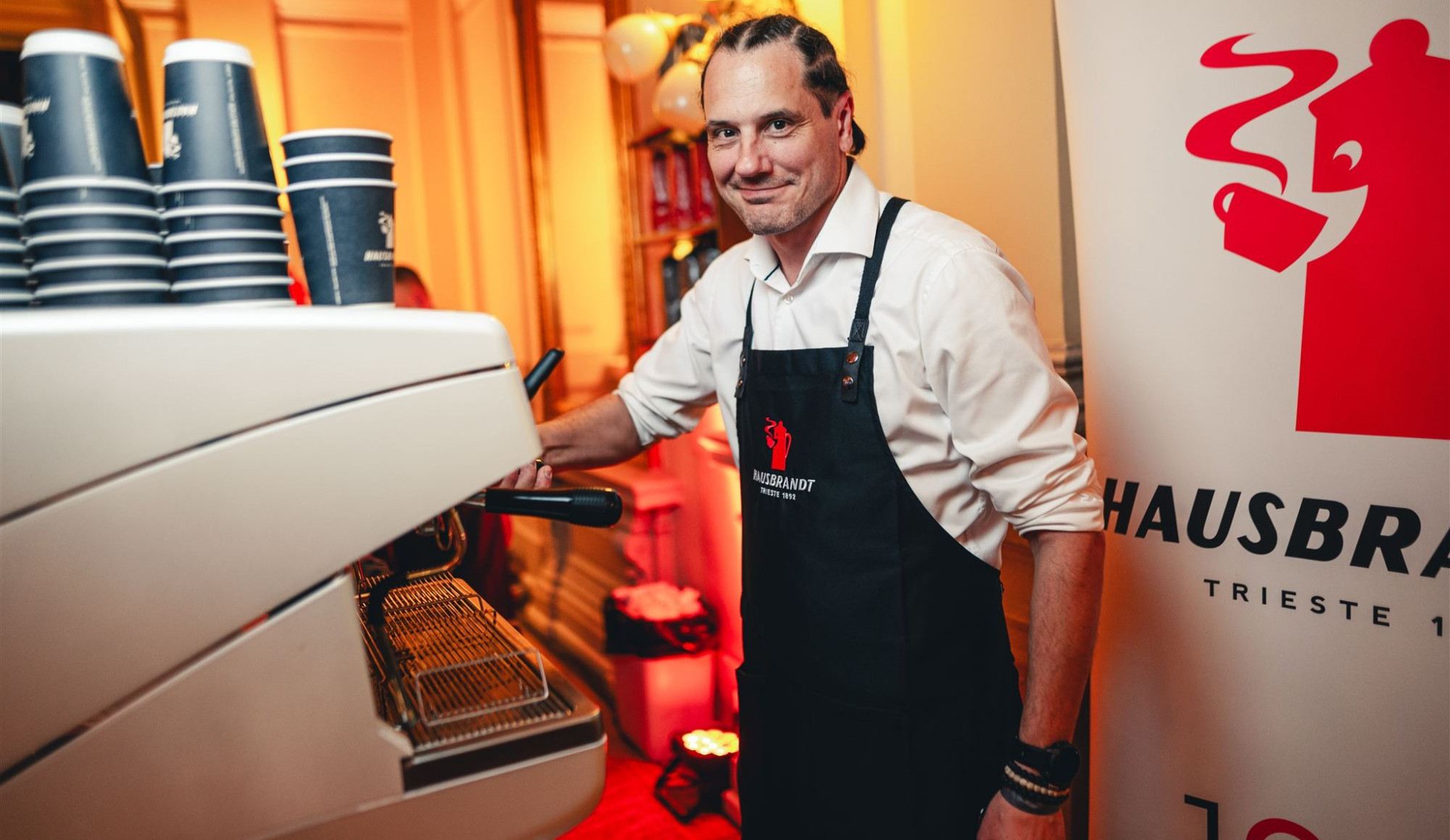
An interview with barista Radek Jániš, who collaborates with the Hausbrandt brand, offers insight into the world of traditional Italian coffee represented by this historic roastery. Its story dates back to the Austro-Hungarian Empire, and to this day, it holds a firm position among the great names of coffee.
The interview took place at the Brno-based venue Lavite, which also partially serves as a showroom for Hausbrandt in the Czech Republic. The conversation was led by Miroslav Lekeš, holder of the Gault&Millau license for the Czech Republic.
In this interview, you’ll discover why consistency of flavour is key for this roastery, how the approach to Arabica and Robusta differs, and what challenges are currently shaping the coffee market. It also offers a practical perspective on gastronomy, service, and what truly determines the quality of a cup of coffee in a restaurant.
What is the history of the Hausbrandt brand, and what position does it hold on the Italian market today?
Hausbrandt is one of the oldest brands in Italy and, alongside Lavazza, ranks among the largest. Its name may sound German, which reflects the fact that the brand was founded in 1892 during the Austro-Hungarian Empire in Trieste. It was established by Austrian-German captain Hermann Hausbrandt. At the time, Trieste was part of the monarchy, though today it is, of course, Italy. The tradition is truly long-standing, and the brand continues to build on it.
What is the first impression that Hausbrandt coffee offers to coffee lovers?
The first impression is clearly consistency. This is a roastery with more than 130 years of history, which means an enormous amount of experience. It is a traditional roastery that has long demonstrated the ability to maintain a flavour profile that appeals to the majority of people — what we might today call the mainstream. At the same time, it offers reliability — you know exactly what you’ll get in the cup.
Does that mean this is not an experimental coffee whose flavour changes significantly over time?
Large roasteries do have a tendency to experiment, but they are also aware that the core of their business lies in products that sell in high volumes. Until there is significantly greater demand for single-origin specialty coffees, it doesn’t fully make sense for large roasteries — also due to technological limitations. Coffee cannot be aged like wine, which is one of its disadvantages. At the same time, it shares many characteristics with wine that influence its flavour — such as soil, climate, and altitude.
How do customers who prefer traditional flavours perceive Hausbrandt coffee?
Hausbrandt is a typical representative of traditional Italian coffee. It’s a classic that people look forward to — much like when you travel abroad for an Italian espresso. I’ve tested this across various groups of customers, from corporate clients to festivals, and people return precisely because they get the flavour they expect.
What product lines does Hausbrandt offer? Can it cover different types of gastronomy operations?
Yes, the portfolio is very broad and covers a wide range of operations — from breakfast blends and coffees for automatic machines to higher-end lines. The more affordable blends contain more Robusta, which is more resilient and better suited for demanding machine settings. That doesn’t mean it’s lower quality — it’s simply designed differently.
How do you perceive Arabica and Robusta in terms of quality?
I’m not a fan of the idea that only 100% Arabica is high quality. There are excellent and average Arabicas, just as there are with Robustas. Arabica offers a wider range of flavours, while Robusta is simpler and often more bitter — but that bitterness is exactly what many people enjoy. Taste is highly subjective — some prefer sweetness, others acidity, and others bitterness.
Has the situation on the coffee market changed recently?
Yes, quite significantly. The price of Robusta has risen dramatically, and the price differences between blends have narrowed. In the past, the gap between a breakfast blend and a specialty Arabica was much more noticeable; today, it’s far more about flavour preference than price.
How does Hausbrandt appeal to more demanding fine dining customers?
Of course, it also offers higher-end 100% Arabica lines for a more delicate flavour. However, the more specific you get, the more you realise that there is no universal taste. What one person enjoys may not appeal to another, even when comparing two specialty coffees.
What do you offer restaurants that are not satisfied with their current coffee and decide to switch to you?
We offer a complete coffee service — from selecting the raw product to technology and staff training. However, we often find that the issue is not the coffee itself, but its preparation. If staff do not follow the correct procedures, even the best ingredients won’t help.
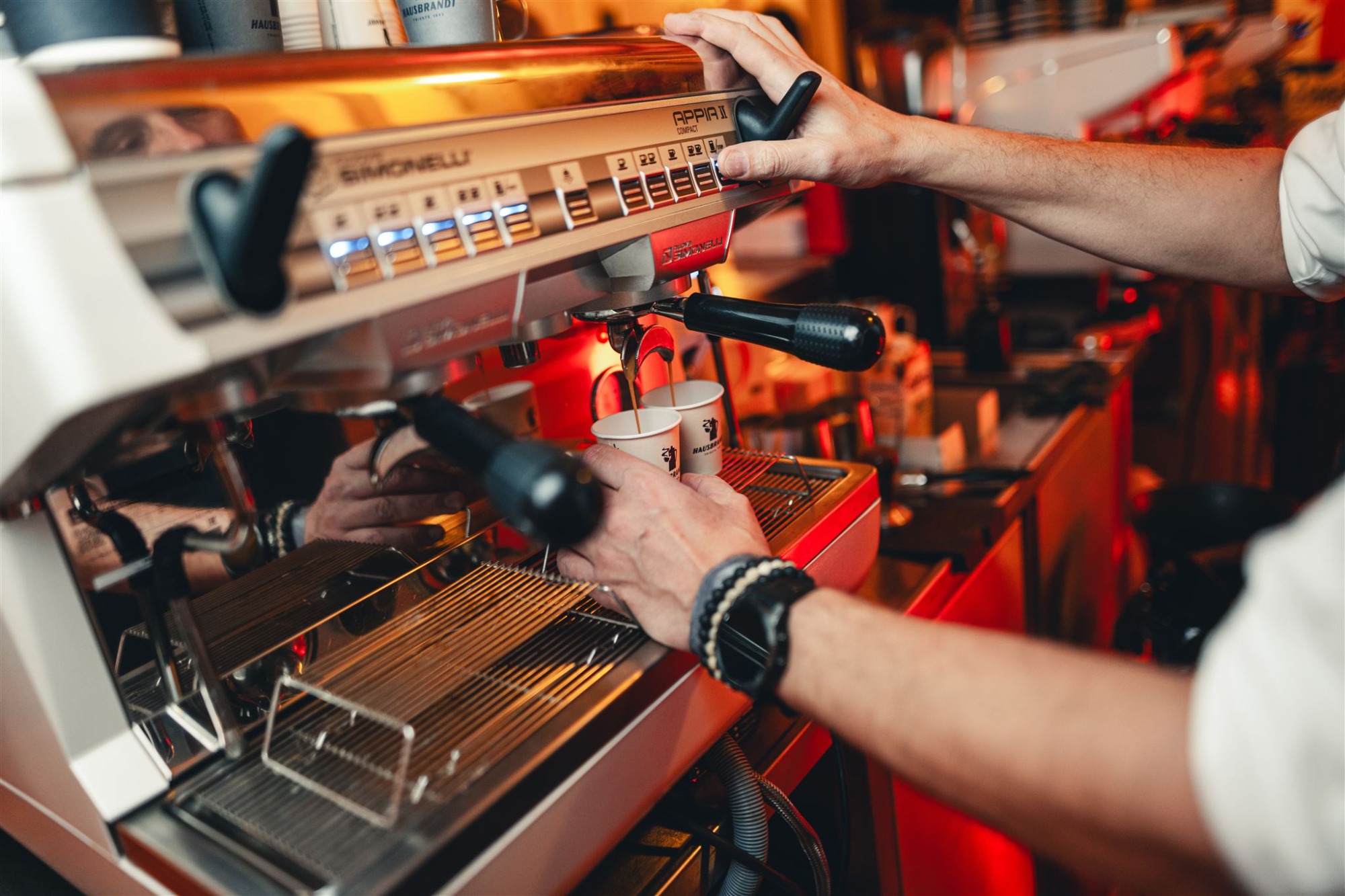
Do you also carry out quality control in gastronomy operations?
Yes, we conduct mystery shopping. We aim to maintain and monitor quality because it is essential for us that the brand is presented correctly. However, we sometimes encounter situations where different coffee is being served in our cups, which is an issue across the entire market.
What coffee are we drinking here at Lavite?
We’re drinking the Superbar blend, which we use across our operations. It’s a popular choice and appeals to most people.
How does your role as the exclusive distributor of Hausbrandt in the Czech Republic work, and how important is it today to monitor the origin and authenticity of coffee?
We guarantee quality, service, and product origin. Our goal is to bring clients tradition and Italian coffee culture. The most counterfeited products tend to be the best-selling brands, which is why it’s essential to ensure verified origin and a clearly structured distribution system.


