October 2, 2026


Author: G&M Editorial Team
Translated by ChatGPT.
Every month, Gault&Millau regularly introduces you to exceptional chefs working in Czech restaurants awarded with our toques.
Behind a perfect plate placed on your table lies not only precise technique and quality ingredients, but above all personality. Who are the Chefs who prepare unforgettable gastronomic experiences for you?
In this series, we reveal their human side. You will learn where they come from, what inspired them to become chefs, and what path led them to their current position in a Gault&Millau-awarded restaurant. But not only that – you will also discover who they are when they take off their chef’s jacket, how they spend their free time, what recharges their energy, and what small items they always carry with them, wherever they go.
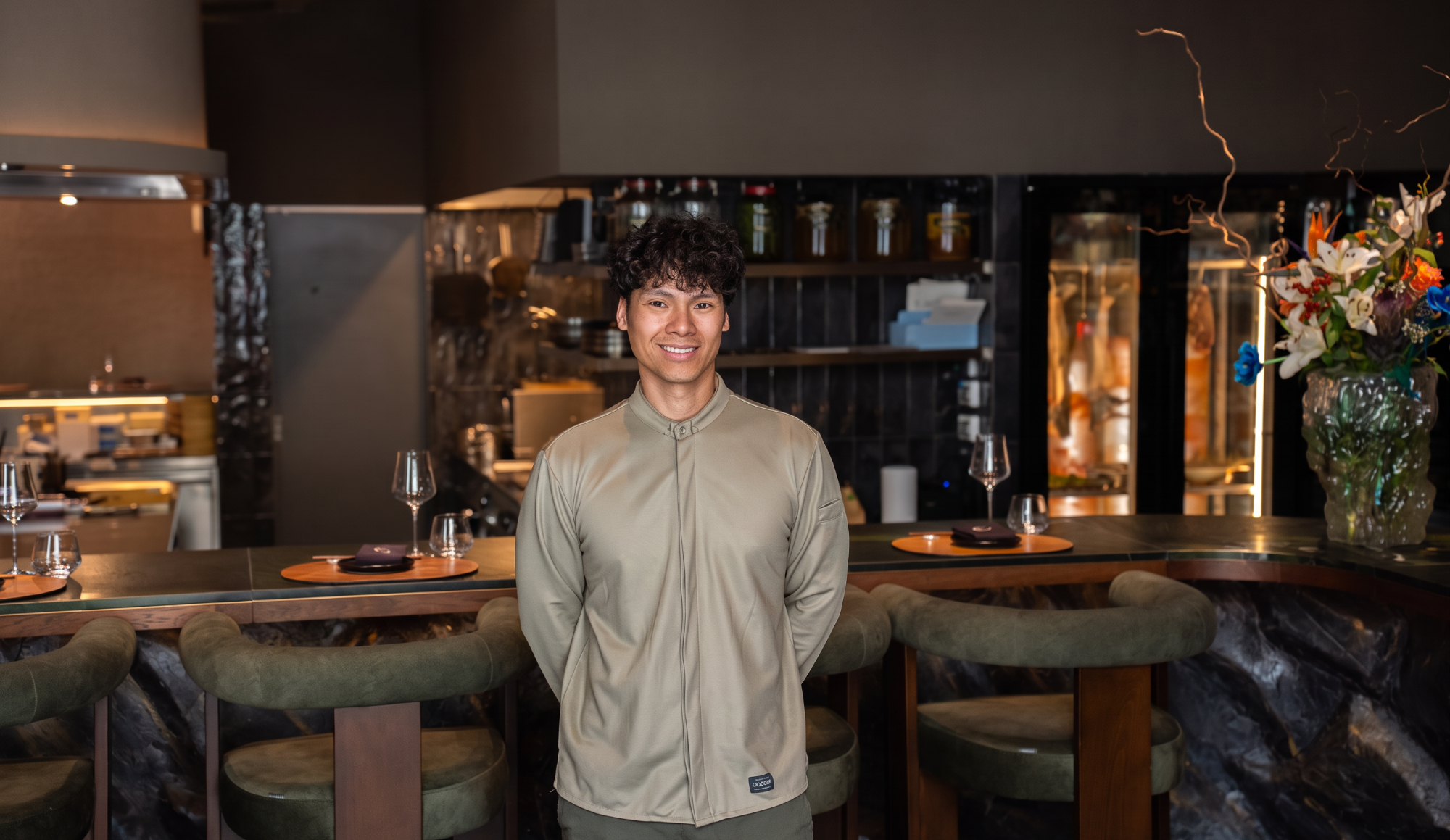
Meet Jan Knedla from Papilio, the best restaurant in the Czech Republic, awarded 17 points and 4 Gault&Millau toques, and at the same time Chef of the Year 2025.
I am a chef who believes in honesty, ingredients, and his own hands. I grew up in Jeseník, where my grandfather taught me to respect nature and what it gives. In the kitchen, I seek balance between tradition and innovation – and I still enjoy it.
I studied at a hotel school in Jeseník, but cooking only truly began to shape me abroad.
Cooking has been with me since childhood – at home, we baked, preserved, and were always cooking something. Professionally, I started in Glasgow, but the real turning point came when I met Andrea Accordi. That’s when I understood that fine dining is not just a job, but a lifelong passion. Since then, I’ve gained experience in England, Italy, and Hong Kong, and today I connect it all at Papilio, where we give Czech cuisine a modern face without losing its soul.
I learned to truly cook gradually – but mainly with humility. Every kitchen I worked in taught me something. But the key realization was that without respect for the craft and the team behind you, it doesn’t work. The most valuable for me was the combination of French precision, Italian lightness, and Czech ingenuity – and that’s what I now try to capture in every dish.
I believe that honesty and respect for nature will always get you the furthest. Every season has its beauty, and I want to put it on the plate so the guest can feel where the food comes from. Sophistication, patience, and pure flavor – that’s my guiding principle.
Yes – that a chef has to be tough, otherwise it doesn’t work. But I believe that empathy and calm actually make the team stronger. Today I know that good cooking comes from a good atmosphere.
I like meals that smell of home – for example, rabbit in cream sauce or mushroom sauce. We also often cook with my uncle – liver, kidneys, hearts in wine. These are dishes that remind me of family comfort.
Usually I cook, but I stick to simpler dishes. In summer, we love grilling – fish, poultry, seafood, and fresh salads. When it gets colder, I like to make a hearty sauerkraut soup or roast game with mushrooms.
I love cooking sauces from scratch, with patience and care. I’m also drawn to vegetable dishes, where the pure flavor of the ingredients shines, and to offal, which offers space for creativity while honoring traditional cuisine.
I find inspiration everywhere – in nature, with farmers, in old and new cookbooks, in traditional recipes and unusual flavor combinations. My wife and I also love to travel for food – most recently we visited L’Arpège with Alain Passard, whose approach to cuisine and vegetables is admirable. Even a simple ingredient can become something extraordinary if you pay attention to it.
There are more guests traveling across the country to visit us, and people are talking about us more. But within our team, nothing essential has changed – we are still a small group that pays attention to every detail.
Definitely cheese. Hard, soft, aged – the stronger, the better – and a piece of good bread to go with it.
I like them very much. I’ve been collecting them for years – both old and new. They contain not only recipes, but also stories and a philosophy of cooking. For me, they’re a source of inspiration and a reminder that every dish has its origin and meaning.
On October 19, we are preparing the Gault&Millau Dinner of the Year, where I will cook together with Daniel Tilinger (Chef of the Year in Slovakia) and Maroš Jambor, presenting a tasting menu at the Fairmont Hotel. But food lovers can mainly meet me directly at Papilio. Every evening, our team prepares a seasonal menu full of flavors that tell our story. Come and enjoy it – we’ll be happy to welcome you.
Mostly rock – it has drive, rhythm, and energy that I need both to focus and to relax. For me, it’s the backdrop that keeps me in flow.
I rest best when I spend time with my wife and family, whether at home or on trips. I like to enjoy peace away from the bustle of the kitchen, ideally in nature, where you can completely switch off.
Yes, but always in a way that supports our philosophy. At the restaurant, we cultivate our own koji, which allows us to ferment not only meat and fish, but also vegetables. Modern technology helps us control the process to the degree, but taste and character come mainly from time and patience.
Most often jeans, a T-shirt, and comfortable shoes – simply whatever makes me feel good.
I’d like to keep doing what I love – cooking, creating, and discovering new flavors. I keep the future open. Right now, I focus on making every day in the kitchen worthwhile – the rest will show itself.
I think it should be someone who truly lives their cuisine, supports local suppliers, and has a clear style recognizable at the first bite. Of course, there are several names, but personally I root for Otto Vašák, Maroš Jambor, and Martin Štangl.
Paradoxically, it’s offal – something that was once a common and valued part of our ancestors’ cuisine, but today many people avoid it. Yet these ingredients are full of flavor, tradition, and possibilities, and if prepared properly, they can absolutely thrill guests.
A stronger chefs’ community, where we share experiences more and support each other. We have many talented chefs and excellent products, but we need more openness, sharing, and cooperation to move Czech gastronomy forward together.
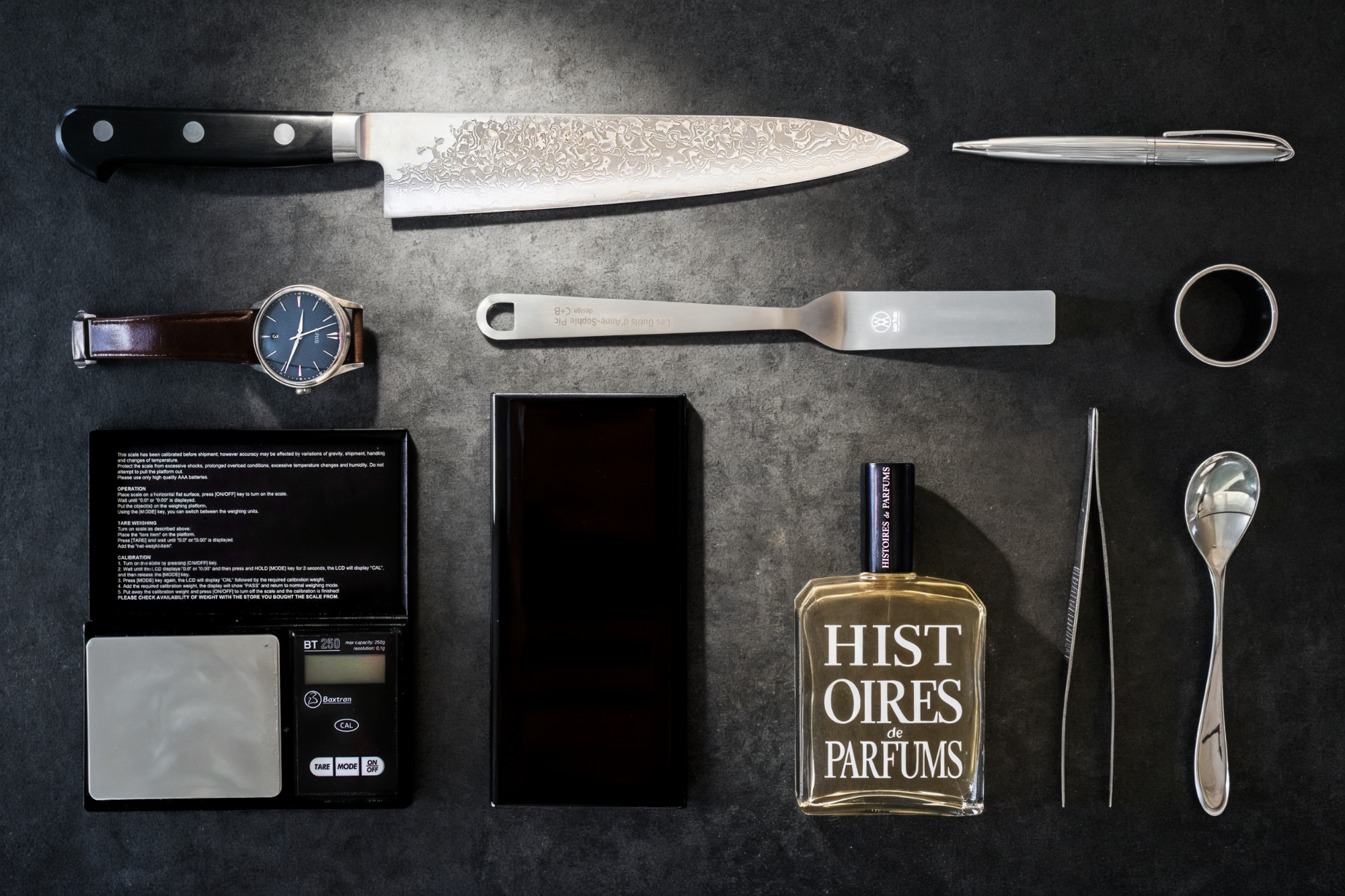
Knife – an extension of the hand. Without it, no idea could find its way onto the plate.
Pen – without it, chaos would reign in the kitchen. I need to jot down ideas and recipes right away.
Watch – a gift from my wife, reminding me every time that the most important thing is the time we spend together.
Palette knife – allows me to work on the finest details, where every millimeter counts.
Cutter – a small thing, but it helps create big moments on the plate.
Mini scale – sometimes grams make the difference. The scale helps me balance precision and creativity.
Phone – connects me with the world, farmers, guests, and family.
Perfume – a little detail, but important to me. When I meet guests in person, I want to look polished – and I myself like to smell good.
Tweezers – a tool for details – sometimes it makes the difference between food and a true experience.
Spoon – a simple tool that accompanies chefs from the beginning – to taste, adjust, decide.