June 26, 2026

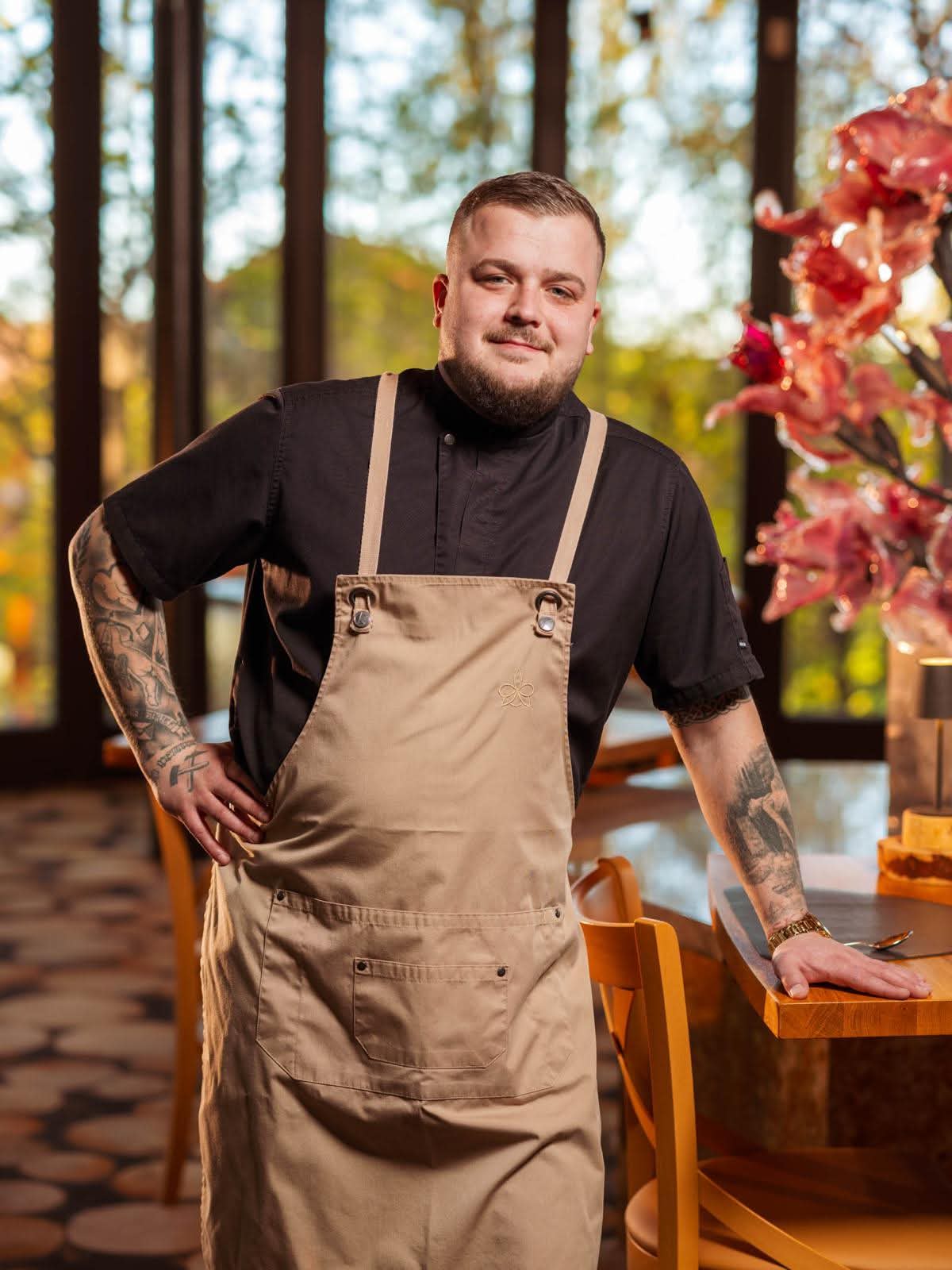
Deep in the heart of the Beskydy Mountains, surrounded by forest, lies Villa Cattaleya — a restaurant that brings together fine dining and the wild beauty of its natural surroundings. Head Chef David Mecko builds his menu on seasonality, local ingredients, and inspiration from Silesian cuisine, which he reinterprets through modern techniques and a distinctive personal approach.
In his kitchen, traditional żurek meets fermentation, accompanied by non-alcoholic pairings that can feel closer to perfume than a conventional beverage. The result is a cuisine rooted in memory, emotion, and a strong connection to the place where it is created.
We met David Mecko on-site in April, at a time when the kitchen was fully transitioning into the spring season. In an open conversation, we spoke about the philosophy of the restaurant, working with ingredients sourced from the surrounding forests, and the everyday reality of running a hotel restaurant in the middle of the Beskydy Mountains.
Could you briefly introduce the concept of the restaurant? What defines your approach?
We’re a hotel restaurant. We offer both an à la carte menu and a twelve-course tasting menu, which we change about four times a year. In spring, we really “springify” the menu, so it evolves a lot depending on the season. At its core, we cook Czech cuisine — but in our own way.
You mentioned that you reinterpret Czech cuisine in your own way. What does that “twist” look like on the plate?
We draw a lot from Silesia and Ostrava, where we come from. This cuisine is heavily influenced by Poland, but today it’s not really being explored much — it’s a bit forgotten.
We cook dishes like bigos, hearty soups, or Silesian żurek. We also work a lot with fermented vegetables — the Polish are incredibly strong in this area.
We take these traditional dishes and “deconstruct” them. We use modern techniques, but we always make sure the result makes sense — and most importantly, that the flavour stays true. That’s key for us.
So the core ingredients have to remain intact?
Absolutely. You can’t completely reinvent them. If you overdo it, it becomes unnecessarily complicated. It still has to remain what it is. Żurek has to stay żurek. You still have sourdough, smoked bones, mushrooms… we just take it a step further.
Since we’re from Ostrava, we added local sausages, for example. But that’s just one case.
At the same time, Silesian cuisine has its limits. If someone claimed to cook purely Silesian cuisine, they would quickly run out of options. It’s largely based on cabbage, smoked meats, pork — there aren’t endless ingredients to work with creatively.
When it comes to ingredients and seasonality, are the Beskydy Mountains in any way different?
There are farmers here — for example, the Menšík farm with excellent cheeses — so you can source quite a lot locally.
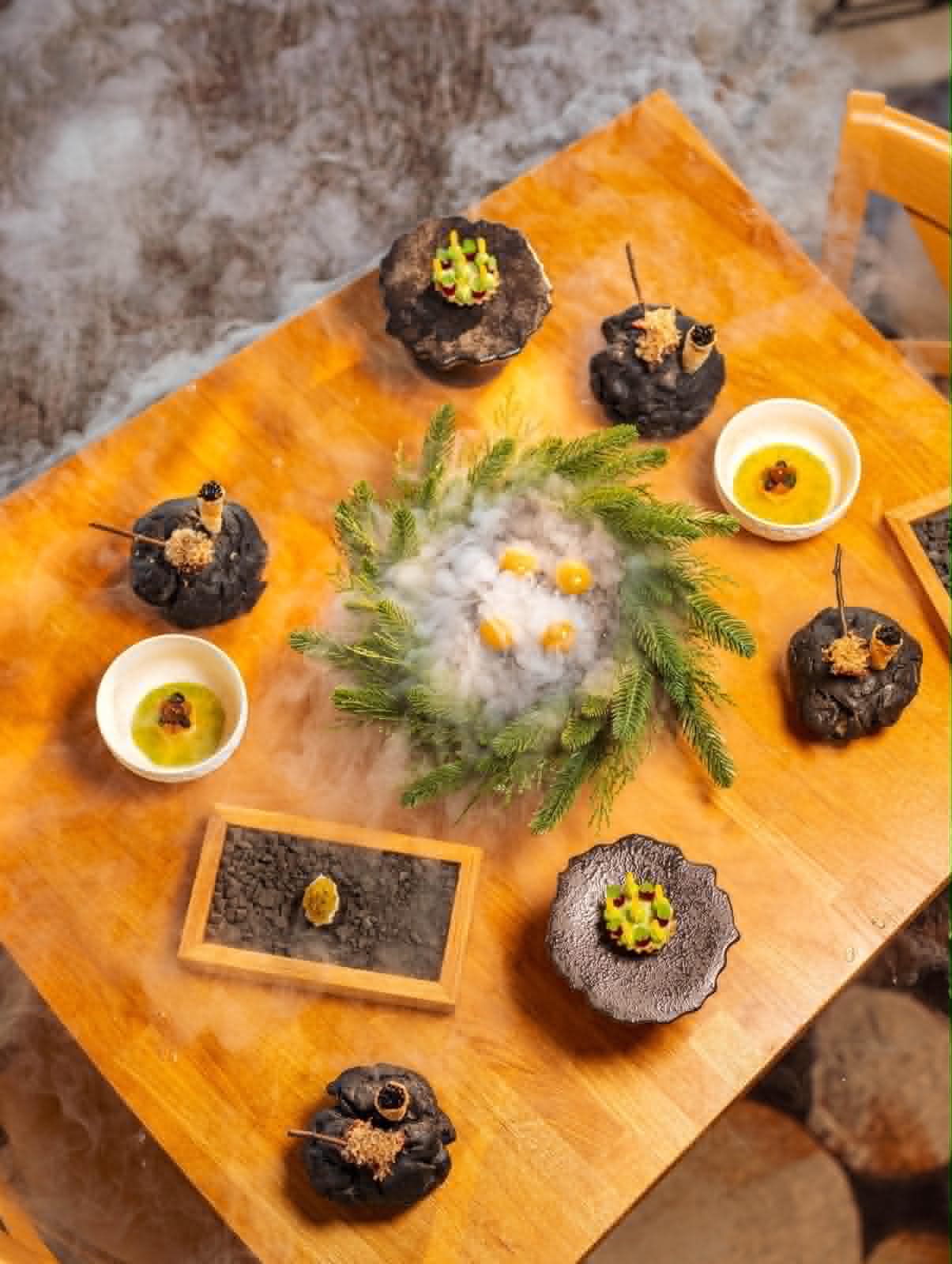
But our biggest advantage is nature. We can literally step outside into the forest and gather ingredients. We use things like nettle, dead nettle, spruce shoots, cornflowers for garnish, cones for syrups… a wide variety of wild ingredients.
On the other hand, we don’t forage mushrooms ourselves — that could be risky. One mistake could ruin an entire dish. If someone misidentifies a mushroom, the whole sauce might have to be thrown away.
So you rely on trusted suppliers for mushrooms?
Exactly. We work with someone who specialises in it. He brings us morels, false morels, occasionally cauliflower mushrooms and other varieties. That’s something we prefer to leave to an expert.
Do you collaborate with other local producers?
Not extensively, but one worth mentioning — and recommended to me by Michal Goth — is a farm run by Mrs Tomšíčková in Valašsko. They produce absolutely outstanding goat cheese. Truly exceptional — many people say they’ve never tasted anything like it.
How does seasonality shape your current menu?
In spring, everything starts to come alive. When I design a menu at the beginning of the year, around February, it’s still quite “empty” — mostly root vegetables, heavier, wintery dishes.
But once spring arrives, we have to quickly adapt. Suddenly wild garlic appears, watercress becomes available, morels come in… everything changes.
Do you place greater emphasis on desserts? They are often somewhat overlooked in restaurants.
In our case, it’s divided. For the tasting menu, we don’t serve classic pastry-style desserts. Our pastry team focuses more on French pastry — choux, craquelin and similar creations.
For the tasting menu, we create our own “chef-style” desserts. I’d say they are more refined and better integrated into the overall flavour progression.
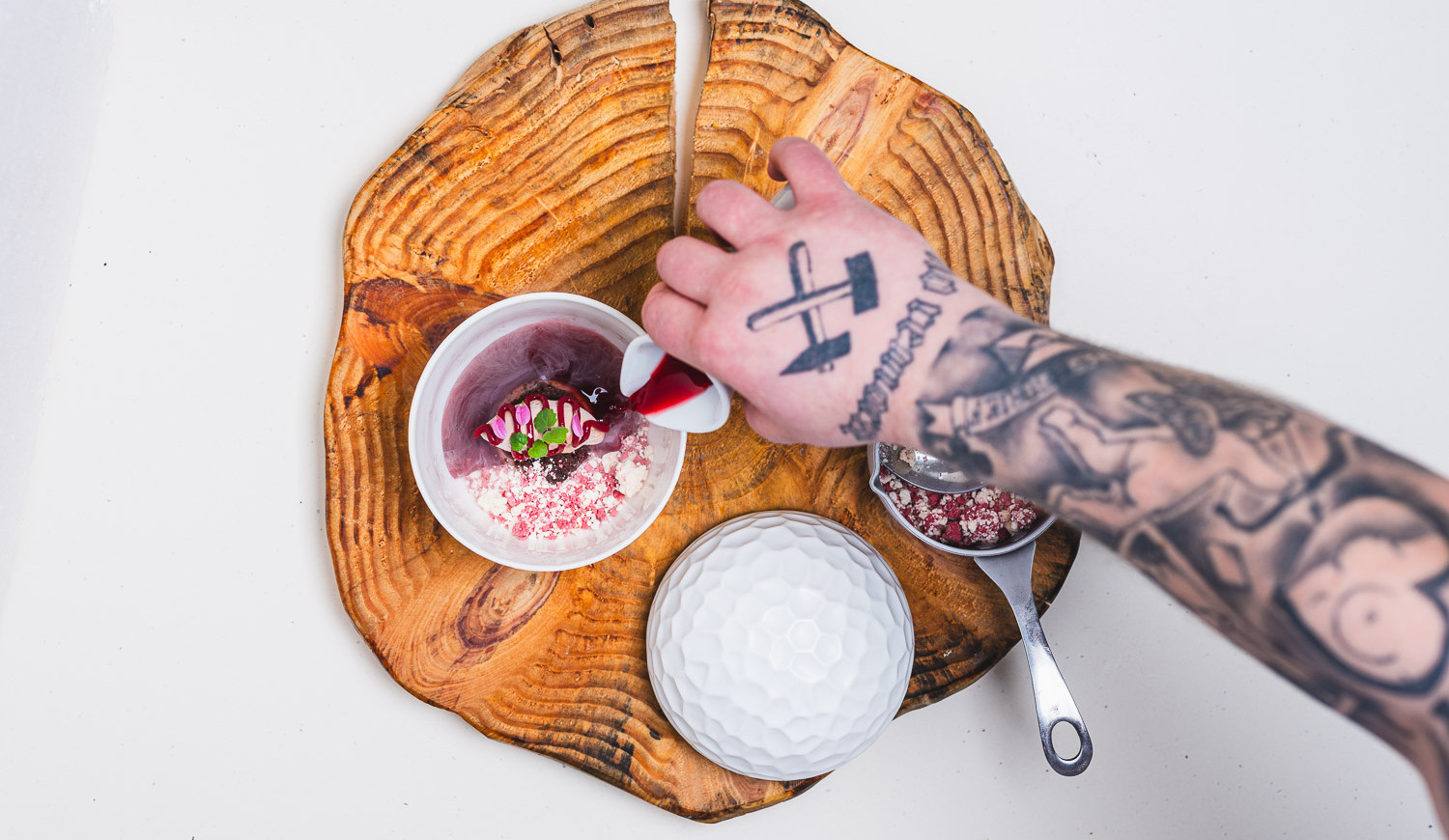
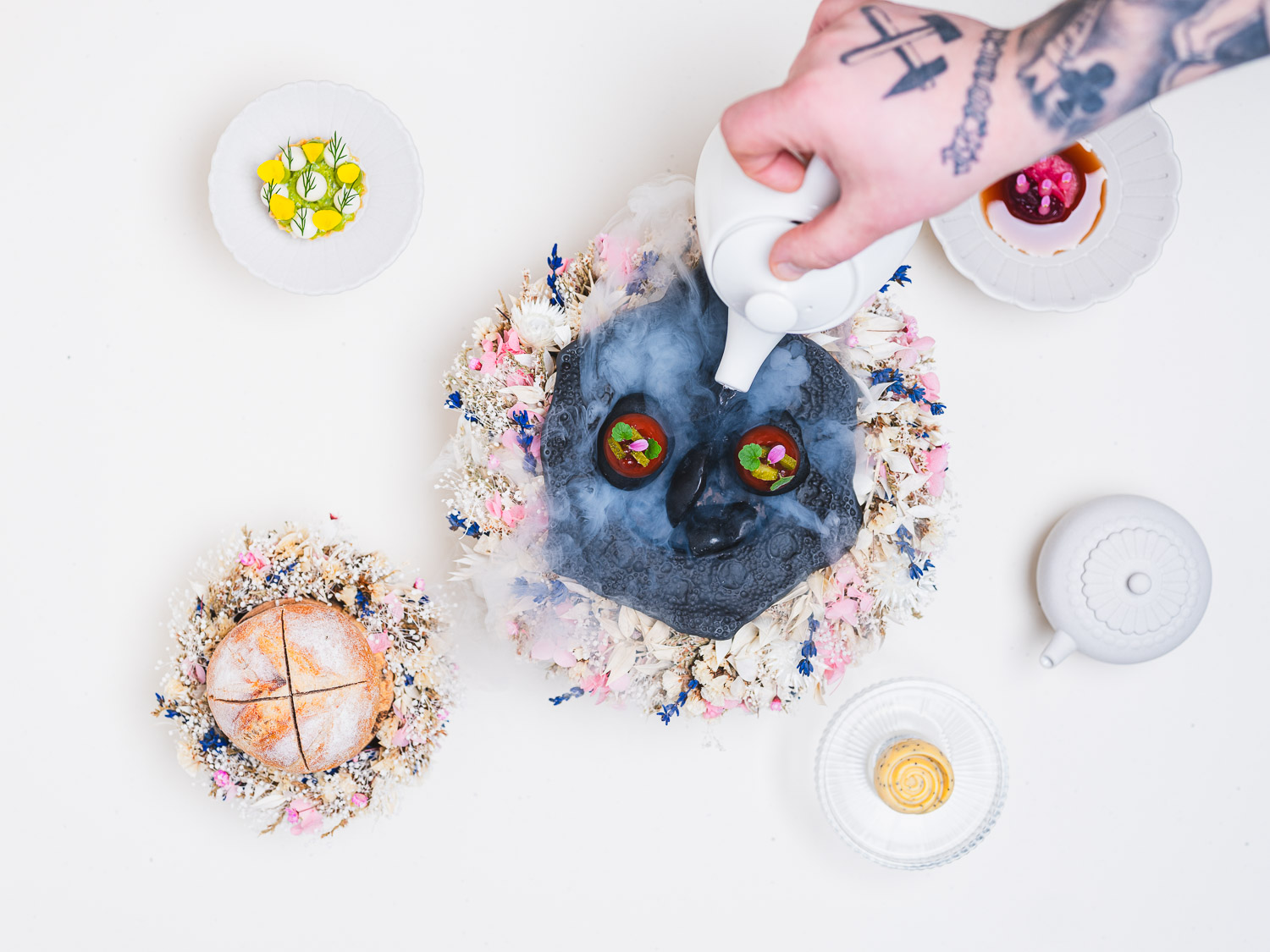
For example, in April we prepared a dessert with sorrel granita, rhubarb ice cream, and a non-alcoholic gin.
We do it ourselves because when I compose a menu, I want it to function as a whole.
How involved is the pastry team in the restaurant’s daily operation?
They bake all our bread — rolls, sourdough loaves. In the afternoon, many guests come just for coffee and dessert, so they’re served a platter of five desserts to choose from.
The selection changes constantly. Our pastry chef Natalia Skovorodina and her team are truly a hidden gem of the Beskydy region.
They also run baking classes and take care of wedding desserts, including beautifully prepared candy bars.
Is creating your own desserts for the tasting menu a challenge?
Not at all — quite the opposite. I really enjoy it.
You also mentioned non-alcoholic pairings, which are becoming increasingly popular. How are they received?
Very well. I think they’ll only grow in popularity.
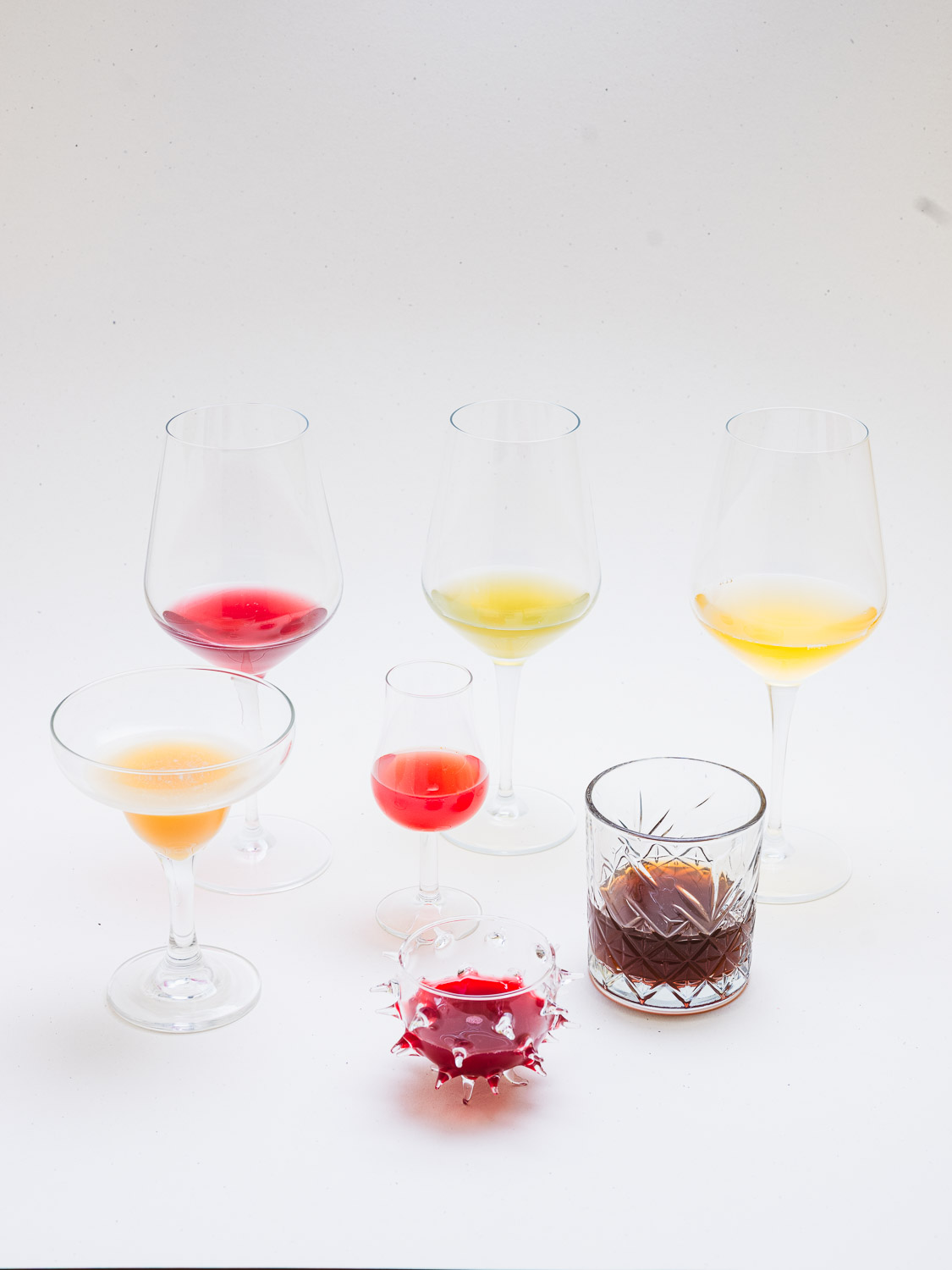
We develop them as a team, but our manager Pavel Žárský focuses on it a lot. I’ve also created many of them myself. We ferment, infuse, experiment. We’re even planning to get distillation equipment to push it further.
When I’ve experienced pairings elsewhere, they often felt like simple juices. We’re not afraid to go further — to combine almost anything.
I’m personally inspired by perfumes, especially Arabic ones — cedar, incense… and we’ve translated that into pairings.
For example, we created a non-alcoholic pairing for game using spruce, incense, and juniper. It smelled and tasted almost like a perfume. We called it IDDQD, after a childhood game cheat code for immortality.
Another time, we created a drink that tasted like yeast dough from childhood — made from yeast, cream, lemon zest, and sugar, clarified into a clear liquid but with that exact nostalgic flavour.
Do you have signature pairings, or do they change seasonally?
There have to be some constants, but otherwise we adapt everything to the season. It doesn’t make sense to serve elderflower in November, even if it’s preserved.
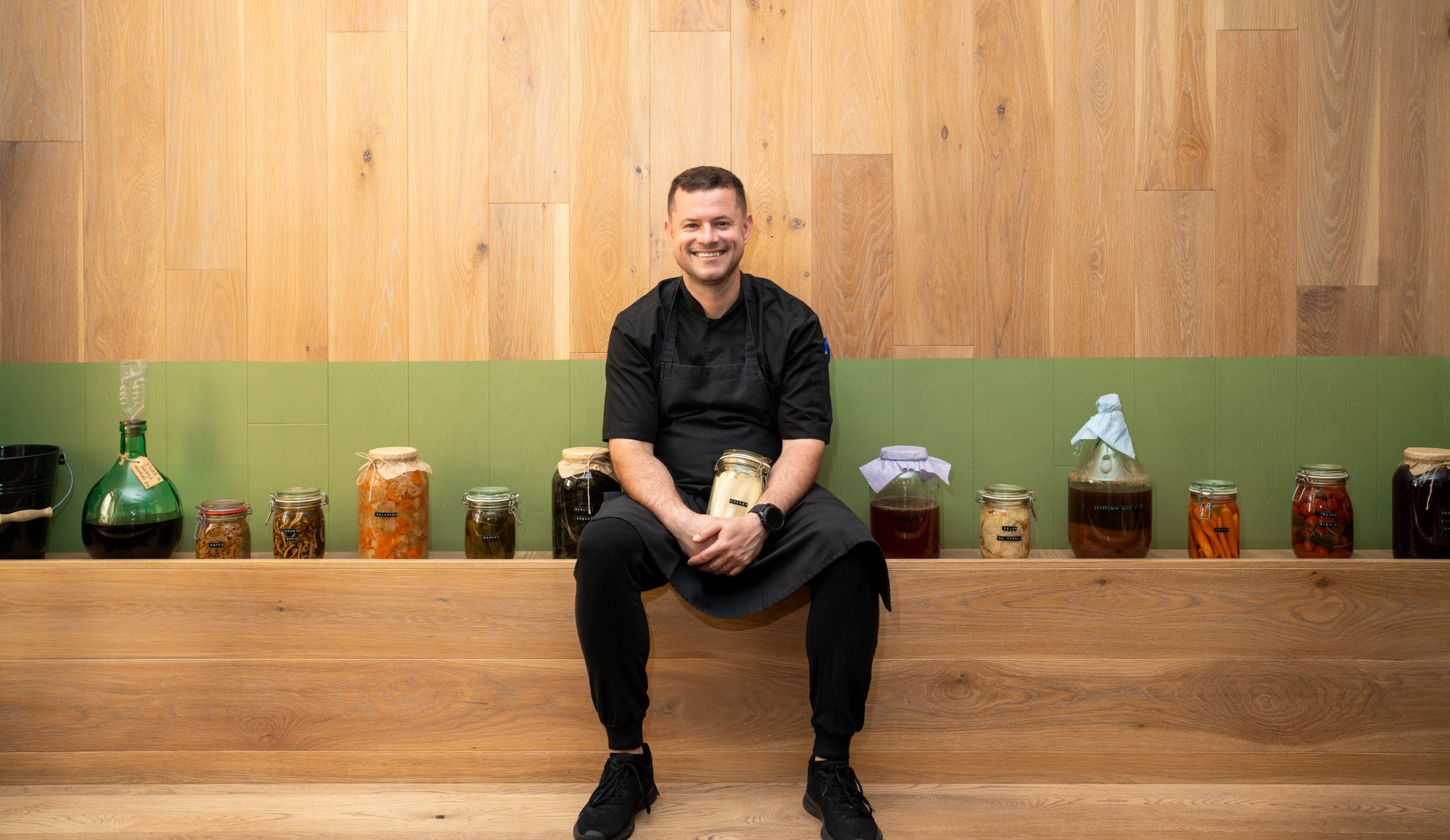
We prefer to work with ingredients when they are naturally in season. We experiment a lot — we have shelves full of jars, we test things and then decide whether they work or not.
Being located in the forest is quite unusual. Is it an advantage or a challenge?
It’s definitely a challenge. In a city, you can attract guests more easily — here, people have to make a conscious decision to come.
We’re in what I jokingly call a “forgotten region” — gastronomy here is not at the same level as in Prague.
So yes, it’s a challenge.
Do guests return regularly?
We don’t have a large base of regulars. In the year and three quarters I’ve been here, I’ve noticed we have a few loyal guests, but not many.
People tend to come for new tasting menus and follow what we’re doing, rather than visiting frequently.
Do you think being a hotel restaurant can be a barrier?
In general, hotel restaurants have it harder.
We have to handle everything — breakfast, à la carte, tasting menus, weddings, full operations. It’s much more complex than a standalone fine dining restaurant.
It would be easier to focus purely on tasting menus. But here, guests expect variety.
Creating a twelve-course tasting menu that is both creative and operationally manageable, alongside an à la carte menu, is already demanding. And when the restaurant is full and there are only three of us in the kitchen, it can get quite intense.
How difficult is it to find staff?
Very difficult. You won’t find chefs at the labour office. Anyone who wants a job has one, so it’s mostly about attracting people from elsewhere.
I think our service is one of our strengths. We finish many dishes in front of the guests, which makes the experience very dynamic. Sauces are poured tableside, desserts are finished in front of you — everything happens right in the dining room. And we also have strong wine expertise.
Where does your team come from?
We’re all from Ostrava, actually. No one is from elsewhere — except one guy from Brno, but he’s basically an “adopted Ostravian” now.
You’ve received recognition from both Gault&Millau and Michelin. Where do you want to go next?
First of all, it would be great to be fully booked every day. That’s the foundation.
Everything else is a reward — it motivates you to keep going.
We’re a young team, so of course we want to make the most of it. But at the moment, we’re probably at the limit of our capacity and energy.
People talk a lot about constant progress. We try, but at the same time, you’re immersed in daily operations. Sometimes you think you’ve created something new, only to realise you did something similar a year ago — it just looks different now.
We’re simply trying to do things well. And most importantly — we enjoy it. We have a great kitchen, a good environment, and it works.
Two Days of Inspiration, Expertise and Networking with the People Shaping the Future of Czech Gastronomy